
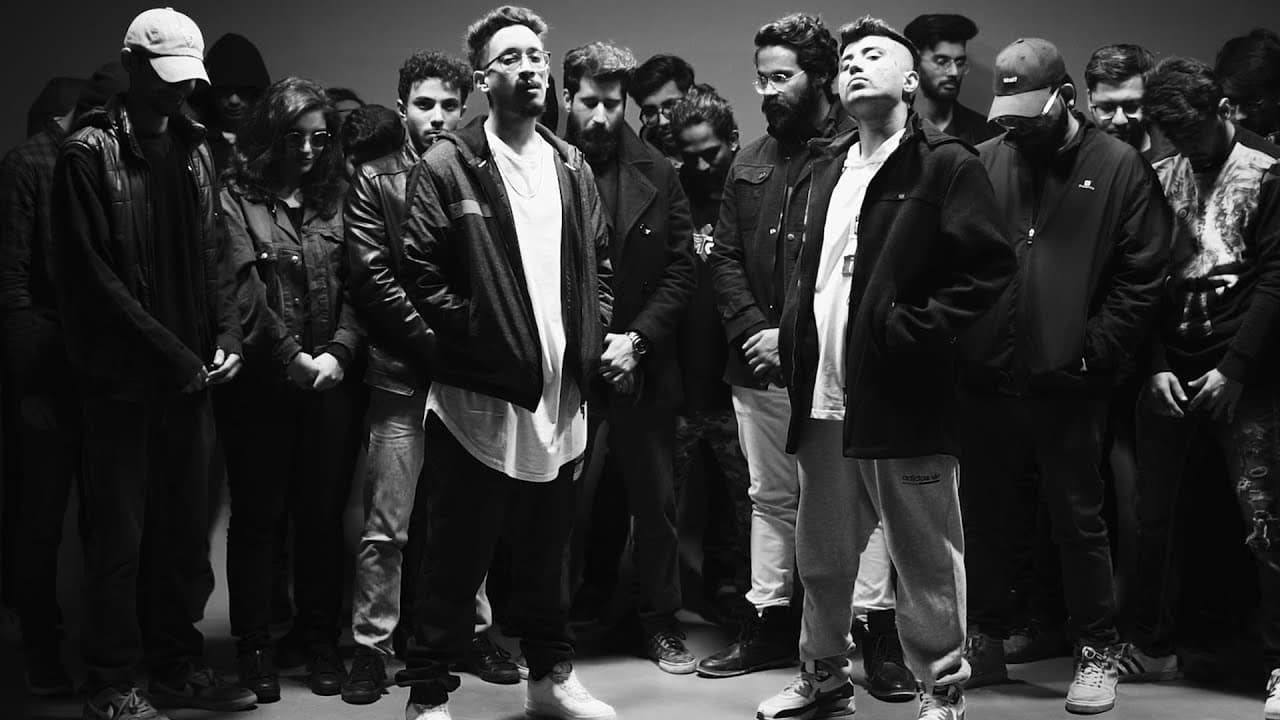
India's hip-hop scene has crossed every boundary the critics said it couldn't. In 2023, close to 30% of all Spotify Top 50 tracks in India were hip-hop — and more than 70% of those listeners were Gen Z (Spotify India, November 2024). By April 2025, an Indian rapper was headlining Coachella with Kerala percussionists on stage. Desi Hip Hop (DHH) isn't a sub-culture anymore. It's the culture.
Whether you're a fan trying to catch up, an artist figuring out how to get in, or a creative professional working in India's music industry — this guide covers the full picture: who the key artists are, how the label ecosystem works, which regional scenes are exploding, and the real pathways to breaking in as a new act in 2026.
Key takeaways
- In 2023, close to 30% of India's Spotify Top 50 tracks were hip-hop, with over 70% of hip-hop listeners on Spotify India being Gen Z (Spotify India, November 2024)
- Hanumankind's "Big Dawgs" (July 2024) crossed 400 million Spotify streams and hit #23 on the US Billboard Hot 100 — the highest international chart position ever for an Indian rap track
- Seedhe Maut crossed 1 billion cumulative streams in 2025, selling out 11 Indian cities on their SMX Tour before taking it globally
- India had 178 million online music streamers in 2025, with paid subscribers up 37% year-on-year to 14.4 million (FICCI-EY India M&E Report 2026)
- New artists most reliably break in via YouTube, Instagram Reels, Spotify's Rap 91 playlist, and MTV Hustle — no major label required to start
What Is Desi Hip Hop — and Where Did It Come From?
Desi Hip Hop is India's homegrown rap and hip-hop culture: music made in Indian languages — Hindi, Tamil, Malayalam, Punjabi, Marathi, and more — rooted in Indian streets and shaped by Indian realities. The term desi means local, indigenous, of the homeland. That's the whole point. DHH isn't imitation American rap. It's something India built for itself.
The scene took shape in Mumbai's Dharavi neighbourhood in the early 2010s, where artists like Divine and Naezy were rapping about life in the gullies long before anyone called it a movement. The 2019 Bollywood film Gully Boy — based on their stories — brought DHH to a mainstream Indian audience for the first time. That was the cultural moment when parents and film critics started paying attention.
What's happened since is faster than almost anyone expected.
The Numbers: India's Rap Scene in 2026
India's music streaming base grew to 178 million online listeners in 2025, streaming approximately 6 trillion songs — a 15% year-on-year increase. Paid subscribers jumped 37% to 14.4 million, generating ₹10.3 billion ($118.2M) in subscription revenue alone (FICCI-EY India M&E Report 2026).
Hip-hop sits at the center of that growth.
Playlist benchmark: Spotify's Rap 91 — India's flagship hip-hop editorial playlist — grew 110% in followers over two years to November 2024. The Rap 91 family (including Haryanvi, Malayalam, Marathi, and Punjabi rap offshoots) now tops 1.5 million followers, ranking in the global top 10 most-followed hip-hop playlists on Spotify.
The playlist now spans 10+ Indian languages, which tells you where DHH is actually growing fastest: not in Hindi alone, but in Malayalam, Haryanvi, Tamil, and Punjabi. Spotify's annual Rap 91 Live festival featured close to 40 artists performing in October 2025 at the Dome, NSCI Stadium in Mumbai — the largest edition yet.
If you're a music professional working in this space, find verified collaborators and credits on kredl →
Must-Know Artists in 2026
Divine
The elder statesman of DHH. Divine has 5.3 million Spotify monthly listeners and 1.4 billion+ cumulative streams across platforms. His February 2024 collaboration with Karan Aujla, Street Dreams, debuted at #22 on the Billboard Canada Albums chart and hit #1 on Apple Music in 20+ countries in under 24 hours — the fastest any Indian album had reached that milestone. His 2025 album Walking on Water dropped ahead of his Rolling Loud India performance in November 2025. Divine also founded Gully Gang Entertainment, which operates as a gateway label for Mumbai artists and distributes through the Mass Appeal India / UMG pipeline.
Hanumankind
The biggest global crossover in DHH history happened on July 9, 2024, when Hanumankind dropped "Big Dawgs." The track crossed 400 million Spotify streams, peaked at #11 on the Spotify Global Top 50, and entered the US Billboard Hot 100 at #23 — only the second Indian track in the modern streaming era to appear on that chart. A$AP Rocky remixed it in December 2024. Then on April 12, 2025, Hanumankind became the first Indian hip-hop artist to perform at Coachella, taking the stage with traditional Kerala Chenda Melam drummers. His debut mixtape Monsoon Season (Capitol Records / Def Jam / UMG, July 25, 2025) features A$AP Rocky, Denzel Curry, and Maxo Kream — confirmation that he's not a one-track story.
MC Stan
MC Stan won Bigg Boss 16 on February 12, 2023, declared the most-voted contestant in Bigg Boss history. His win was DHH's widest mainstream television moment: millions of Indian households were introduced to Pune's rap vernacular through a prime-time reality show. He's accumulated 693 million total Spotify streams and 4.8 million Spotify followers. His style sits in the mumble rap corner of DHH — melodic, emotion-driven, heavy on auto-tune — and that's exactly what connected him with audiences far beyond the scene's usual boundaries.
Seedhe Maut
Delhi duo Encore ABJ and Calm are the scene's most respected lyricists. In 2025, they crossed 1 billion cumulative streams and sold out 11 Indian cities on their SMX India Tour (60,000+ tickets). They founded their own label DL91 in 2024 after departing Azadi Records, and took the SMX World Tour to the UK, North America, and Europe — proof that lyrical DHH has a genuine international audience when the craft is at a high enough level.
Badshah
The most-streamed Indian rapper on Spotify by a significant margin. Badshah became the first Indian rapper to cross 5 billion total Spotify streams and accumulated 1.16 billion streams in 2024 alone, reaching 20 million+ monthly listeners. His 2025 independent album Fitoor marks a creative shift after years as a mainstream pop-rap crossover artist. Whatever the underground thinks of his sound, his numbers are the benchmark everything else gets measured against.
KR$NA
The underground's most respected technical rapper. His May 2025 mixtape Yours Truly (Mass Appeal India / Kalamkaar) features Badshah, Raftaar, UK rapper Aitch, Seedhe Maut, and Yashraj — a tracklist that proves the gap between underground credibility and mainstream collaboration has narrowed significantly. KR$NA is the artist other rappers cite when the conversation turns to pure craft.
Emiway Bantai
India's biggest independent artist, full stop. 22.2 million YouTube subscribers. 4.4 billion+ cumulative YouTube views. No major label, ever. Emiway built Bantai Records in 2020 and proved the independent model works at massive scale in India. For any new artist asking whether you need a label to make it in DHH — Emiway's career is the only answer you need.
Connect with music producers, engineers, and composers who work in hip-hop on kredl →
How to Get a Record Deal in India in 2026
The Label Ecosystem
| Label | Backing | Key Artists | Approach |
|---|---|---|---|
| Gully Gang Entertainment | Artist-owned (Divine, 2019) | Divine, Shah Rule, Aavrutti | Mumbai-rooted; UMG distribution pipeline |
| Mass Appeal India | Nas + UMG (2019) | Divine, Ikka, KR$NA, Young Aytee | JV with UMG India; signs acts with existing underground following |
| Azadi Records | Independent, Delhi (2017) | Prabh Deep, Ahmer, swadesi, Tienas, Kim The Beloved | 20+ roster artists; politically conscious; no commercial compromise |
| Def Jam India | UMG subsidiary (2022) | Dino James, Fotty Seven | International distribution focus for Indian and South Asian hip-hop |
| Bantai Records | Artist-owned (Emiway, 2020) | Emiway Bantai + signees | Fully independent; the proof-of-concept that labels are optional |
| DL91 | Artist-owned (Seedhe Maut, 2024) | Seedhe Maut, DL91 collective | Named after Delhi; founded post-Azadi departure |
| Kalamkaar | Collective | KR$NA and collaborators | Producer-rapper collective; co-released Yours Truly with Mass Appeal India |
The pattern across every label that's actually worked: they start from artist credibility, not corporate infrastructure. Mass Appeal India (backed by Nas) takes a joint-venture approach — they partner with artists who already have underground traction rather than developing unknowns from scratch. Azadi Records refuses commercial compromise entirely and curates a politically conscious roster. Gully Gang stays close to Mumbai street culture.
There's no single path to label interest. But there's a consistent precondition across all of them: build a genuine fanbase first, somewhere specific.
Regional Scenes: Where DHH Is Growing
Mumbai — Where It Started
Mumbai's Dharavi neighbourhood is DHH's spiritual home. Gully rap was born here: Hindi + Marathi + English, autobiographical street storytelling, raw delivery. Divine, Naezy, MC Stan (Pune, adjacent), and MC Altaf shaped this sound. Rolling Loud India's inaugural edition in November 2025 — 33 acts, two days at Loud Park, Mumbai — confirmed the city's status as DHH's commercial center as well as its cultural one.
Delhi — The Underground Capital
Delhi runs deeper on lyricism. Seedhe Maut, KR$NA, Prabh Deep, Ahmer, and swadesi all operate from or are connected to the Delhi scene. Azadi Records is headquartered here. The city has a more developed battle rap ecosystem than Mumbai and a stronger tradition of conscious, politically engaged hip-hop. If you care about wordplay and craft above everything else, Delhi is where to look.
Punjab and Haryana — The Diaspora Machine
Punjabi trap and bhangra-hip-hop fusion dominate this corridor. Badshah, AP Dhillon, and Karan Aujla are the mainstream faces. Haryanvi rap showed the most rapid listenership growth of any regional DHH variant in India during 2023–24 (Spotify data). The diaspora element is significant: Punjab and Haryana-origin artists consistently have the largest international streaming bases in the DHH ecosystem.
Kerala and South India — The Fastest-Growing Scene
The most explosive regional growth story in DHH right now. Malayalam rap — centered around Malappuram and Kochi — is producing artists at a pace that's catching national attention. Hanumankind filmed "Big Dawgs" in Malappuram. Baby Jean (23, Malappuram), Dabzee, ThirumaLi, MC Couper, and the ARJN/KDS collective are all gaining national traction. In Tamil Nadu, Asal Kolaar's "Jorthaale" became a street-level viral phrase in Chennai. The South Indian scene is the one to watch most closely in 2026.
Northeast India — The Alt-Rap Frontier
Shillong and Manipur have a growing alternative hip-hop scene that sounds unlike anything else in DHH. Reble (Daiaphi Lamare, Meghalaya) blends alt-rap with punk energy. Kim The Beloved operates out of Shillong. Yelhomie represents Manipur. These artists work in indigenous languages and bring Northeast cultural identity into the music in ways that stand entirely apart from the Hindi-dominant mainstream.
Subgenres: A Quick Decoder
Gully rap — Mumbai street storytelling in Hindi, Marathi, and English. Raw, autobiographical, lo-fi adjacent. (Divine, Naezy, MC Altaf)
Conscious/political rap — Lyricism-first, social commentary, no commercial compromise. Azadi Records is the home. (Seedhe Maut, Prabh Deep, Ahmer, swadesi)
Punjabi trap — 808 bass + bhangra rhythms + Punjabi lyrics + diaspora swagger. Massive global streaming. (Badshah, AP Dhillon, Karan Aujla)
Desi Drill — UK Drill production localized to India. Sliding 808s, minor keys, street realism. Haryanvi drill is the fastest-growing variant, with Dhanda Nyoliwala as its pioneer.
Malayalam/regional rap — Rapid-fire flows in Malayalam, often with traditional instrument samples. Energetic, community-rooted, and growing faster than any other regional subgenre. (Hanumankind, Baby Jean, Dabzee, ThirumaLi)
Mumble rap India — Melodic, emotion-driven, heavy auto-tune, trap-adjacent. Less emphasis on wordplay, more on feel. (MC Stan, Fotty Seven)
Tamil rap — Chennai-based, often with Kollywood crossover. High-energy, hook-focused, regional pride. (Asal Kolaar, RANJ, Clifr)
Five Milestone Moments That Shaped Modern DHH
February 12, 2023 — MC Stan wins Bigg Boss 16. Declared the most-voted contestant in Bigg Boss history. Millions of television viewers across India are introduced to DHH through prime-time TV. This was the scene's widest mainstream spotlight in its history — bigger than any music chart milestone at the time.
July 9, 2024 — Hanumankind drops "Big Dawgs." The track goes globally viral, peaks at #11 on the Spotify Global Top 50, enters the US Billboard Hot 100 at #23, and earns 150 million TikTok views in weeks. Only the second Indian track in the modern streaming era to chart on the Billboard Hot 100.
December 5, 2024 — A$AP Rocky remixes "Big Dawgs." US hip-hop's most influential tastemaker co-signs an Indian artist without qualification. The remix circulates in rooms where DHH previously had no presence.
April 12, 2025 — Hanumankind performs at Coachella. The first Indian hip-hop artist on the Coachella stage. He performs with traditional Kerala Chenda Melam drummers, Maxo Kream joins live. India's rap scene reaches its most prominent international platform.
November 22–23, 2025 — Rolling Loud India (inaugural). Mumbai hosts the first Rolling Loud festival in India. 33 acts across two days at Loud Park. Karan Aujla becomes the first artist from the host country to lead the bill at an international Rolling Loud.
What Seedhe Maut's 2025 shows: The duo's 1-billion-stream milestone and 60,000-ticket India tour happened in the same year — and those are two different audiences. The streaming numbers come from fans who found them algorithmically; the concert tickets come from fans who'd been listening for years. Building both kinds of connection is what a decade of consistent output actually looks like.
How Chaar Diwaari Built 132 Million Streams Independently
How to Break In as a New DHH Artist in 2026
The pathways are real and well-documented at this point. Here's what actually works.
Start with YouTube
Emiway Bantai's 22.2 million subscribers — built entirely without a major label — remains the scene's most convincing proof-of-concept. Upload cyphers, freestyles, and music videos consistently. Desi Hip Hop Inc ("desihiphopdotcom") spent 10+ years as the underground's platform of record; exposure through platforms like theirs still carries credibility within the scene. Reels clips of YouTube videos now drive cross-platform discovery.
Use Instagram Reels as your discovery layer
Short clips of verses — often just audio over text — are how new talent gets noticed in 2026. The scene's gatekeepers (producers, label A&Rs, playlist curators) are on Reels. A verse that catches before you have an official release is a legitimate path to your first break.
Pitch Spotify's Rap 91 playlist
Rap 91 ranks in the global top 10 most-followed hip-hop playlists on Spotify. Getting editorial placement requires either a direct pitch through Spotify for Artists (submit at least 7 days before release) or enough organic streaming momentum to trigger algorithmic playlisting. Streaming velocity in the first 48 hours after release matters more than anything else for algorithmic consideration.
Apply for MTV Hustle
Now in Season 5 (2025). The show has produced 300+ music videos since launch and has launched multiple careers — Dino James and Fotty Seven came up through early seasons. Mass Appeal India, Def Jam India, and Gully Gang actively scout each season. This is the most visible open audition the DHH industry has.
Perform in cyphers
Underground meritocracy is real. 6FU sessions and Project Cypher events are where producers and label reps watch in person. A rapper who can hold their own in a cypher — unedited, live, in a room full of peers — gets noticed. Most label relationships in the Delhi scene start here, not in inboxes.
Build a deep regional audience before going national
The fastest-breaking new artists in 2025–2026 came up with a deep regional fanbase before the algorithm found them. Baby Jean in Malappuram, Asal Kolaar in Chennai, Uniyal in Uttarakhand — they all had genuine home-region loyalty first. Build real fans in one place before trying to be everywhere.
What Mass Appeal India looks for: Their joint-venture model with UMG means they sign artists who already have a verified regional or underground following. Young Aytee signed in 2025 with an existing fanbase in place. Neither Mass Appeal nor Gully Gang has a public submissions process — the path in is organic first, label interest follows.
Find verified producers, mixing engineers, and creative collaborators across India's hip-hop scene on kredl →
The Complete Guide to Building an Independent Music Career in India
Frequently Asked Questions
Who is the biggest Desi Hip Hop artist in 2026?
By streaming volume, Badshah is India's most-streamed rapper, having crossed 5 billion total Spotify streams with 1.16 billion streams in 2024 alone. By global chart impact, Hanumankind's "Big Dawgs" is the highest-charting Indian rap track internationally — #11 Spotify Global Top 50 and #23 US Billboard Hot 100. By cultural influence in the underground, Seedhe Maut's 1-billion-stream milestone and sold-out tours place them in a separate category entirely. The honest answer depends on what you're measuring.
What is the best label in the Indian hip-hop scene?
It depends on your goals. Mass Appeal India (backed by Nas) offers the strongest international distribution pipeline for artists with existing underground credibility. Azadi Records is the right home for conscious or political rap — no commercial compromise, ever. Gully Gang is the choice for Mumbai street artists with a connection to the Dharavi legacy. And Emiway Bantai's Bantai Records proves you can scale to 22 million YouTube subscribers entirely independently. There's no single best — there's the best fit for your sound and your goals.
How does Spotify's Rap 91 playlist work?
Rap 91 is Spotify India's flagship hip-hop editorial playlist, growing 110% in followers over two years to November 2024. It now has over 1.5 million followers across its family of regional playlists (Haryanvi, Malayalam, Marathi, Punjabi rap offshoots) and ranks in the global top 10 for hip-hop playlists. Artists get placed through editorial pitches via Spotify for Artists, submitted at least 7 days before a release date, or through algorithmic momentum triggered by organic first-week streaming. High streaming velocity in the 48 hours after release is the main signal the algorithm responds to.
Which regional DHH scene is growing fastest in 2026?
Malayalam rap from Kerala — specifically the Malappuram and Kochi cluster — is the most explosive regional DHH story right now. Hanumankind put it on the global map with "Big Dawgs," and a second wave of artists including Baby Jean, Dabzee, ThirumaLi, and the ARJN/KDS collective is driving sustained growth. Haryanvi rap showed the fastest listener growth in 2023–24 per Spotify data, but the global crossover narrative belongs to Kerala in 2026.
Is DHH still underground or has it gone fully mainstream?
Both, simultaneously, and that's actually healthy. Badshah playing pop-rap arenas and Hanumankind headlining Coachella is the mainstream lane. Azadi Records artists and Delhi's conscious-rap scene remain as underground-coded as they've ever been. The scene has become large enough to hold both without either side needing to compromise. That coexistence is a sign of maturity — scenes that only exist at one end of the spectrum tend to be more fragile.
Do I need a major label to make it in DHH?
No. Emiway Bantai built 22.2 million YouTube subscribers and 4.4 billion+ views with zero major label involvement, then built Bantai Records on top of that. Seedhe Maut ran an independent label (DL91) that sold out 11 Indian cities and toured the UK, North America, and Europe. The tools for distribution, audience-building, and monetization are accessible to independent artists in India in a way they weren't five years ago. A label accelerates things — it doesn't define whether you can make it.
What's Next for Desi Hip Hop
India had 178 million music streamers in 2025 and only 14.4 million of them were paying. As that gap closes — and the FICCI-EY 2026 projections suggest it will close significantly over the next three years — the revenue pool available to Indian hip-hop artists gets much larger. The artists building deep regional fanbases right now, in Malayalam, in Haryanvi, in Tamil, are building on the right foundation for that shift.
The scene has already proved it can produce global moments. Hanumankind at Coachella, Rolling Loud India in Mumbai, Seedhe Maut touring three continents — these aren't flukes. The next phase is whether the infrastructure around DHH (labels, management, publishing, live booking) can build itself fast enough to capitalise on the momentum. That's the work happening right now, and it's where the real opportunity sits for anyone working in Indian music in 2026.
Whether you're an artist, producer, or creative looking to work in India's music industry — find verified professionals on kredl →