
Image Source: oddessemania
India's independent music festival scene has grown from a handful of city concerts into a multi-thousand-crore live-event economy. In 2024, India's organised live events sector crossed INR 12,000 crore and is projected to reach INR 19,600 crore by 2028, according to a 2025 FICCI-EY report. For independent artists, that growth means real opportunities — but the path from releasing music to stepping on a festival stage isn't obvious. This guide breaks down exactly how Indian festivals select artists, what the application process actually looks like, what you'll get paid (and what you won't), and how to walk into your first festival slot prepared.
Key takeaways
- India's organised live events market was worth INR 12,000 crore in 2024 and is growing at ~18% CAGR through 2028 (FICCI-EY, 2025)
- Most top Indian festivals — NH7 Weekender, Magnetic Fields, Ziro — do not run open-call applications; bookings happen through talent agencies, management relationships, and curator outreach
- Starting act fees typically range from INR 10,000–15,000; a "landed deal" for a mid-tier act covers flights and accommodation and pays INR 40,000–60,000 per performance
- Tech riders are essential — bring a detailed stage plot and input list to every festival inquiry, or you'll lose the slot to an act that did
- Festival pay is almost always lower than college show pay; the trade-off is audience scale, industry exposure, and press coverage
India's Independent Music Festival Landscape in 2026
India's festival ecosystem is more diverse than most artists realise. It spans government-backed cultural gatherings in the Northeast, intimate palace-ground electronic events in Rajasthan, multi-city indie-rock formats in Tier 1 cities, and large-scale commercial EDM gatherings in Goa. Understanding which category a festival falls into determines what doors it opens — and what it pays.
Quick stat: Concert days with attendance exceeding 10,000 grew from 70–80 in 2024 to over 130 in 2025 — a 44% year-over-year expansion. (FICCI-EY, India Live Entertainment Report, 2025)
Here are the major independent and semi-independent festivals every Indian artist should know:
| Festival | Location | Organiser | Genre Focus | Format |
|---|---|---|---|---|
| NH7 Weekender | Jaipur, Indore, Noida (2025 cities) | NODWIN Gaming | Multi-genre: indie, rock, hip-hop, comedy | Multi-city, day format |
| Magnetic Fields | Alsisar Mahal → Khetri, Rajasthan | Abhimanyu Alsisar | Underground electronic, dance music | 3-day, intimate (~3,000–5,000 capacity) |
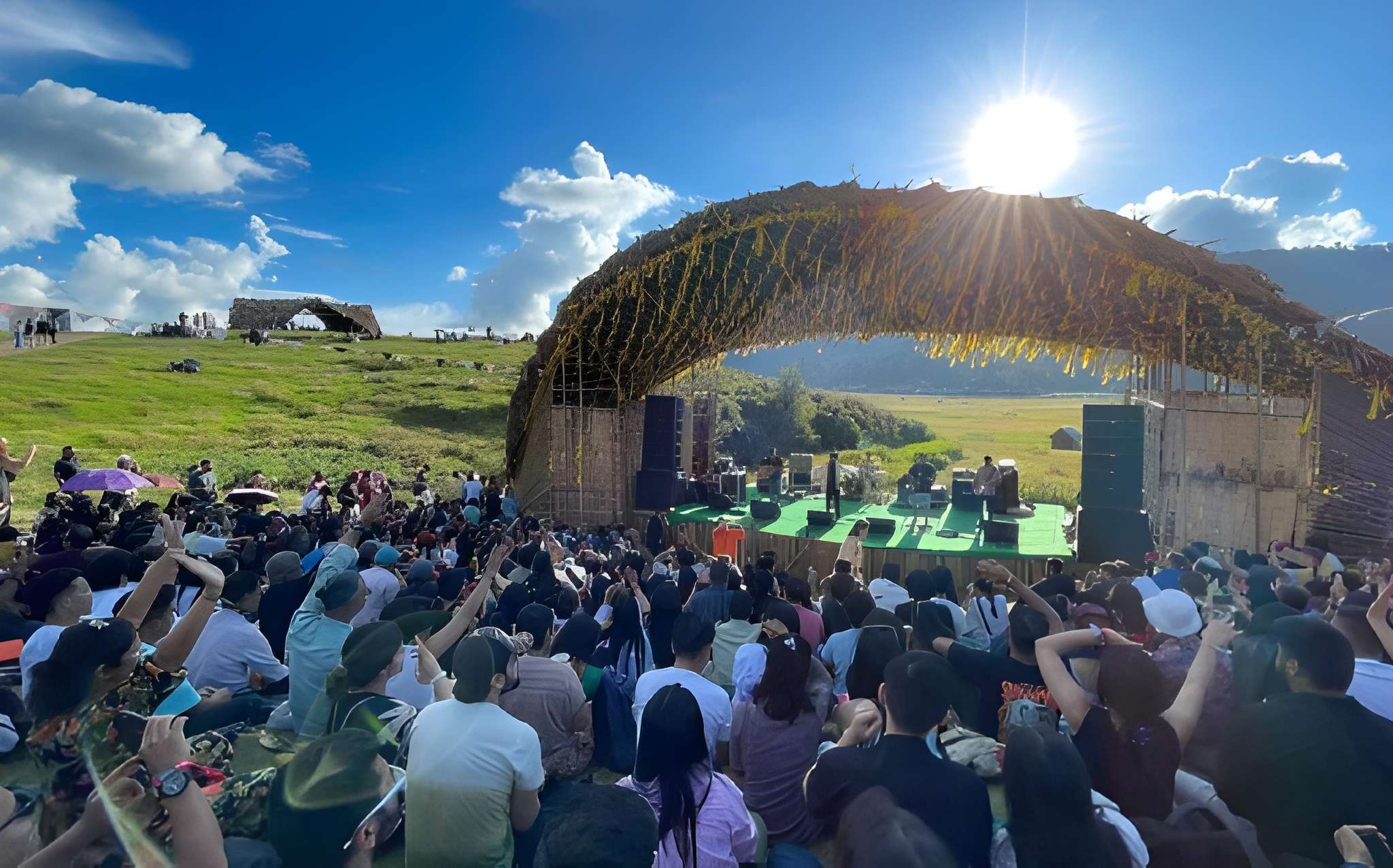
| Ziro Festival of Music | Ziro Valley, Arunachal Pradesh | Bobby Hano | Indie, folk, alternative, world music | 4-day, eco-conscious, September |
| Lollapalooza India | Mumbai | BookMyShow Live | Multi-genre mainstream + indie | Large-scale, stadium format |
| Rolling Loud India | Mumbai | Rolling Loud / India promoters | Hip-hop | 2-day (inaugural India edition: Nov 2025) |
| Sunburn | Dhargalim, Goa | Percept Live | EDM / electronic | Multi-day, 10,000+ capacity |
| Echoes of Earth | Bangalore + Goa | Roshan Netalkar | Electronic, world, conscious | 4-stage outdoor, Feb |
| Jodhpur RIFF | Mehrangarh Fort, Jodhpur | SEHER / Maharaja of Jodhpur | Folk, Rajasthani, world | Biennial, deeply curated |
| Hornbill Festival | Kohima, Nagaland | Nagaland State Government | Folk, tribal, cultural | Government-run, annual December |
Each festival has a different curatorial DNA. NH7 and Lollapalooza India skew commercial-to-indie with heavy sponsor involvement. Magnetic Fields and Ziro are curator-led and identity-driven — getting on those lineups means something different than a sponsored multi-city format. Know which world you're entering before you pitch.
Build your artist profile and make it easy for festival curators to find you. kredl →
How Festival Bookings Actually Work in India
The most common misconception among independent artists is that festivals run open submission portals like college cultural fests do. They don't. At the major festival level — NH7, Magnetic Fields, Ziro, Lollapalooza India — there is no "apply here" button. Bookings happen through one of three channels.
Channel 1: Talent agencies and booking agents
The traditional path. Festivals work with established talent agencies that maintain rosters of vetted artists. The key players in India's live circuit include NODWIN Gaming's own booking arm (for NH7), Percept Live (Sunburn), and BookMyShow Live (Lollapalooza India). For mid-tier acts, independent booking agents facilitate introductions. Getting represented isn't a prerequisite for your first festival slot, but it's close to one at the bigger events.
Channel 2: Curator outreach
For smaller and more identity-driven festivals — Ziro, Jodhpur RIFF, Echoes of Earth — lineup curation often happens through direct outreach by the festival programmer. These curators scout live shows, follow scenes on social media, and tap artists whose work fits their event's identity. The Ziro Festival specifically emphasises Northeast Indian indigenous artists and pan-Indian indie acts who align with its eco-conscious, community-focused ethos. There's no public application form; getting on that radar means playing the right shows and having a credible online presence.
Channel 3: Management relationships
OML (Only Much Louder) built much of India's independent music industry around management. After selling the NH7 Weekender IP to NODWIN Gaming in 2021 for approximately INR 73 crore, OML pivoted away from indie music management toward comedy and digital creators. The artists it retained — Ankur & The Ghalat Family, Nucleya — demonstrate the kind of long-term management relationship that keeps artists consistently festival-booked. Building that kind of relationship with a manager or management company remains one of the fastest routes onto major lineups.
What selectors are actually looking for
Whether a curator finds you through an agent, a live show, or your Instagram, they're assessing the same set of signals: live performance quality (video evidence matters enormously), social following relative to your genre's average, streaming metrics on Spotify and Apple Music, whether you've demonstrated crowd-pull in your home city, how your genre fits the festival's current lineup gaps, and novelty — curators don't want four acts that sound identical.
What to Expect as a Festival Artist in India
Getting the booking is only the start. What happens between "yes" and your set matters for everything from your finances to your performance quality.
The "landed deal" explained
For mid-tier artists playing city editions of major festivals, the standard Indian festival deal is a "landed deal": the festival covers your domestic economy-class flights and accommodation. Food, technical setup costs not covered by the backline, and your personal expenses are generally your responsibility unless explicitly negotiated otherwise.
Starting acts — bands and solo artists in the opening slots — typically receive INR 10,000–15,000 per performance, according to 2025 reporting by The Established based on industry interviews. An established opening act who's been consistently gigging nationally can push that ceiling to approximately INR 30,000. A nationally known indie act in a "landed deal" mid-tier slot can expect INR 40,000–60,000. Popular acts with genuine national audience pull are in the INR 1 lakh-and-above range.
Quick stat: Festival pay in India is consistently lower than college show pay for the same tier of act. The trade-off curators and artists both acknowledge: festival audiences are larger, press is present, and the networking access is real.
Backline and technical logistics
Most Indian festivals of scale provide a house backline: a PA system, stage monitors, a shared drum kit, DI boxes, and stage lighting. Flying artists cannot carry full backlines — international artists in particular rely entirely on house gear. For smaller or regional festivals, backline quality varies significantly.
The practical implications: you must send a stage plot and input list before arrival. Festivals that receive your technical requirements early can plan soundcheck times and flag problems before load-in. Festivals that receive your rider two days before the show will not be able to accommodate special requests. Send your rider when you confirm the booking, not when you confirm your travel.
Soundcheck realities
Load-in and soundcheck windows at Indian festivals are frequently compressed, especially for opening acts. International headliners can negotiate long soundchecks in their contracts. Local opening acts often get 20–30 minutes. Build your set with that constraint in mind: know which songs survive a brief line check and which ones need a full soundcheck to work properly.
Green rooms and catering
Major festivals (NH7, Lollapalooza India, Sunburn, Magnetic Fields) provide backstage green room access. Catering — food and beverages — is typically negotiated per contract and is not automatically included at all tiers. At Magnetic Fields, artists staying on-site benefit from the palace grounds and glamping accommodations; the experience is distinctly different from the bare-bones backstage tent at a one-day city festival.
Find production professionals, sound engineers, and backline techs for your next festival slot. kredl →
Open Mics in India: Which Ones Are Worth It
How to Write a Tech Rider for Indian Festivals
A tech rider isn't bureaucracy — it's the difference between a usable set and a disaster. Here's what to include for the Indian festival context:
Stage plot and input list
A PDF stage plot showing where each band member stands, what gear they use, and where cables need to run. An accompanying input list with channel numbers, instrument/mic type, and any specific requirements (phantom power, specific DI model, etc.). These two documents are non-negotiable. Every professional festival programmer expects them.
PA and monitor requirements
Specify the minimum PA system you need for the expected audience size. If you use in-ear monitors rather than wedges, say so — the festival needs to know whether to set up a separate monitor mix. If you use a click track, specify that too; not every Indian festival has the stage infrastructure to accommodate it without advance notice.
Power specifications
India runs on 220V/50Hz. Electronic acts, DJs, and producers with custom rigs should confirm inverter and voltage stabiliser availability — especially at outdoor festivals where generator power can fluctuate. Specify what you need in writing.
Guest list
Festival contracts typically include a small guest list allocation for the artist. Clarify this at booking. At major festivals, guest list access to the general area is standard; backstage access for your team may need separate negotiation.
What not to over-specify
Riders that read like a catering wishlist from a 2005 rock band — specific beer brands, exact room temperature — signal an artist who doesn't understand the circuit. In India's independent festival context, artists who are easy to work with get re-booked. Specify what you genuinely need for performance quality. Leave personal preferences off the document.
Understanding Festival Fees and the Tax Reality
India's festival economics are complicated by taxation. GST on entertainment event tickets above INR 100 sits at 28%, with some states adding a further 20–30% state entertainment tax on top — pushing the total consumer tax burden to 38–48% in certain states, according to India's Central Board of Indirect Taxes and Customs (CBIC). This structural tax burden constrains ticket pricing and, downstream, artist fees.
Festivals make their money from two sources: ticket revenue and brand sponsorship. NH7 Weekender 2025, for example, was co-presented by House of McDowell's Soda — brand co-presenters are a core part of how India's independent festivals stay financially viable. The artist fee pool comes from this combined revenue. It's why festival pay lags college show pay: colleges have institutional budgets; festivals are managing cost structures that include venue rental, production, logistics, talent, insurance, and sponsor deliverables before a single ticket is sold.
Quick stat: Over 50% of surveyed live event companies in India reported profit margins exceeding 10% in 2025 — but the same FICCI-EY report flagged "unwarranted enthusiasm," noting that several concerts in H2 2025 were cancelled or postponed due to poor ticket sales.
The note about "unwarranted enthusiasm" matters for artists. A festival that looks impressive on its lineup announcement can still fail commercially. Before negotiating your fee, ask about the festival's track record: how many editions have they run, did previous editions sell out, and what's the sponsorship situation? These are legitimate professional questions.
How to Get Your First Festival Slot: A Practical Pathway
Given that most major Indian festivals don't have open submissions, the path to a first booking is about building visibility in the right places.
Step 1: Build a live performance reputation in your city. Curators scout local shows. If you're regularly filling 200-person venues in your home city, you're on the right track. If you're playing to 30 people at a venue that holds 300, the festival case isn't there yet.
Step 2: Document your live performance. A professionally shot live video — even one good song from one good show — is the most powerful booking tool you have. Festival programmers who discover you online will immediately look for evidence that you translate to a live audience.
Step 3: Build your streaming presence. Festival bookers and their agents look at Spotify monthly listeners, YouTube views, and Apple Music metrics. These numbers don't need to be massive — an emerging artist at Ziro or a city-edition NH7 opening slot won't have millions of streams. But the trend matters: consistent growth over 6–12 months signals momentum.
Step 4: Get to the festivals as an attendee. The music industry in India is small. NH7 Weekender, Magnetic Fields, and Ziro all have recognisably tight communities. Being present, building genuine relationships with other artists and crew, and being known in the room matters more than cold-submitting a press kit.
Step 5: Find a manager or booking agent. For artists ready to play mid-tier slots at major festivals, a manager or booking agent who has existing festival relationships is the most reliable acceleration. This isn't the path for every artist at every stage, but for anyone serious about making festivals a consistent part of their income, it's the practical next step.
Connect with music managers, booking agents, and industry professionals on kredl. kredl →
How to Get a Record Deal in India in 2026
The Complete Guide to Building an Independent Music Career in India
Frequently Asked Questions
Do any Indian music festivals accept open artist applications?
A small number of regional and emerging festivals run open-call applications — primarily smaller city events, genre-specific showcases, and newer festival formats trying to build their lineups. The major established festivals (NH7 Weekender, Magnetic Fields, Ziro, Lollapalooza India) do not run public open applications; bookings go through talent agencies, management relationships, and direct curator outreach. Your best chance at open-call festivals is to watch their social media in the months before their announced dates.
Is "pay to play" common at Indian music festivals?
Pay-to-play — where artists pay for stage time rather than being paid — is not documented as a practice at India's established named festivals. It does exist at some smaller city events and open-mic-to-showcase pipelines. If a festival asks you to buy tickets for your own fans or to pay a "production contribution" to perform, research the event carefully before committing. That structure is a significant red flag at anything claiming to be an independent music festival.
What's the difference between a "guarantee" and a "landed deal" in Indian festival contracts?
A guarantee is a fixed fee paid regardless of ticket sales. A landed deal is a package arrangement where the festival covers your flights and accommodation and pays a fee on top. Landed deals are common for mid-tier artists at multi-city festival formats. Revenue-share deals (where the artist gets a percentage of gate receipts) are possible but not widely documented as standard practice in India's festival circuit. Always clarify in writing which structure applies to your contract before confirming the booking.
How far in advance do Indian festivals book their lineups?
Major festival lineups are typically locked 2–4 months before the event, with headliners confirmed earlier (sometimes 6+ months ahead). Opening act slots at city-edition formats can be confirmed as late as 4–6 weeks out. If you're pitching a festival for a specific date, earlier is always better — the first contact should happen at least 3 months ahead of the event.
Should I perform for free to get festival exposure?
The calculus is different at different stages. Early in a career, a high-quality festival performance at an event with credible press coverage can genuinely accelerate booking conversations and industry relationships. That's a real form of value. But "exposure" that doesn't come with press access, an engaged audience, or meaningful industry presence is just an unpaid performance. Before accepting a zero-fee slot, ask specifically: who covers this festival, how many industry professionals attend, and what has performing here done for previous emerging acts on the lineup.
India's independent music festival circuit is real, it's growing, and it pays artists who are ready for it. The INR 19,600 crore that FICCI-EY projects for India's live events market by 2028 means more stage time, more budgets, and more opportunities for artists who understand how the circuit works. Getting there means building your live reputation in your city, documenting your performances, cultivating relationships in the industry, and showing up to every potential booking conversation with a stage plot and a professional attitude. The festival programmers who book you once will book you again if you make their job easy.
Build your professional music profile — the one festival bookers actually check. kredl →